Job Overview
Location: Toronto, Ontario
Structure: Three-story attached house
Problem: Squirrel activity inside the roof, with access through openings along the roofline
Service: Humane squirrel removal, one-way door installation, roof vent protection, and galvanized steel mesh exclusion
Visits: 2
Summary
Our team completed a two-visit squirrel removal and roof exclusion service at a three-story attached house in Toronto, Ontario. The homeowner reported hearing noises inside the roof during daytime hours, consistent with typical squirrel activity.
During the first visit, our technician confirmed squirrel activity and identified two primary entry points. Two one-way doors were installed to allow the squirrels to exit without returning through the same openings. Additional exclusion work included protecting four roof vents with galvanized steel cages and securing one plumbing vent with galvanized steel mesh.
A second technician assisted with the work due to the height and configuration of the three-story structure.
During the follow-up visit, the homeowner confirmed that squirrel activity was no longer being heard or observed. Our team removed both one-way doors and permanently sealed the entry points, completing the removal and exclusion service.
Background / Property Context
The property was a three-story attached house with an asphalt-shingle roof, exterior brickwork, and multiple roof penetrations.
The roof included several intersecting slopes, ventilation openings, a plumbing vent, and soffit sections beneath the roof overhangs.
These architectural features created several areas requiring inspection for potential wildlife access.
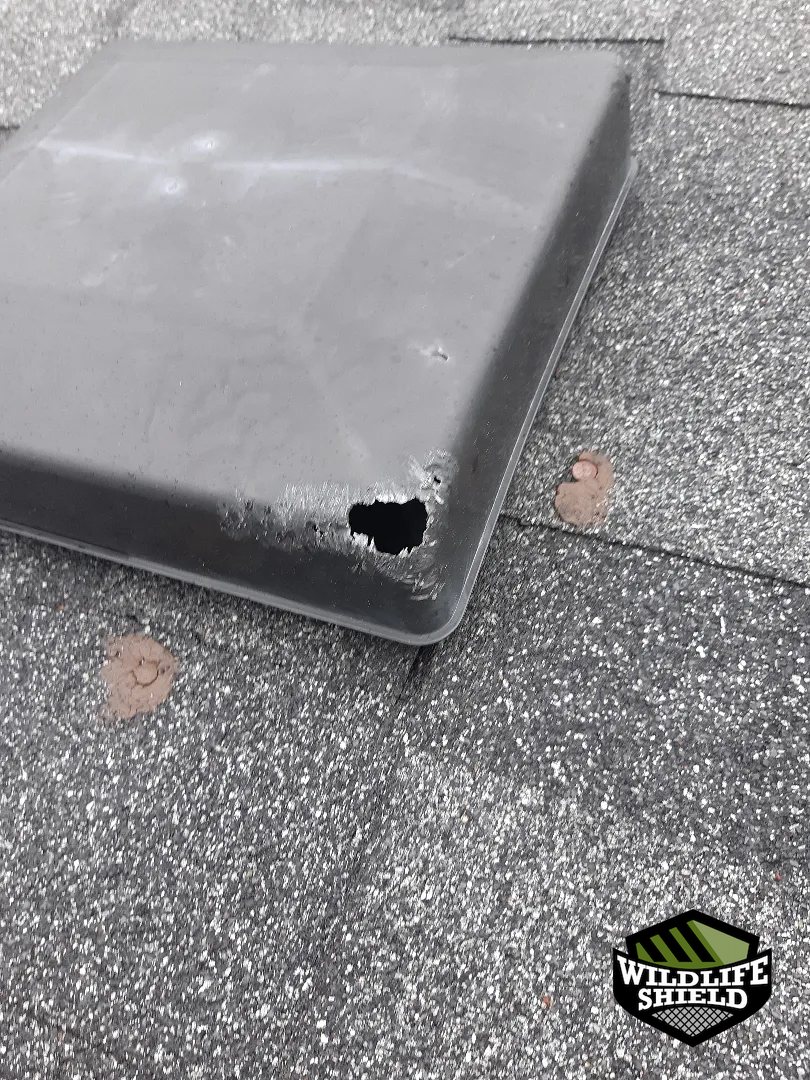
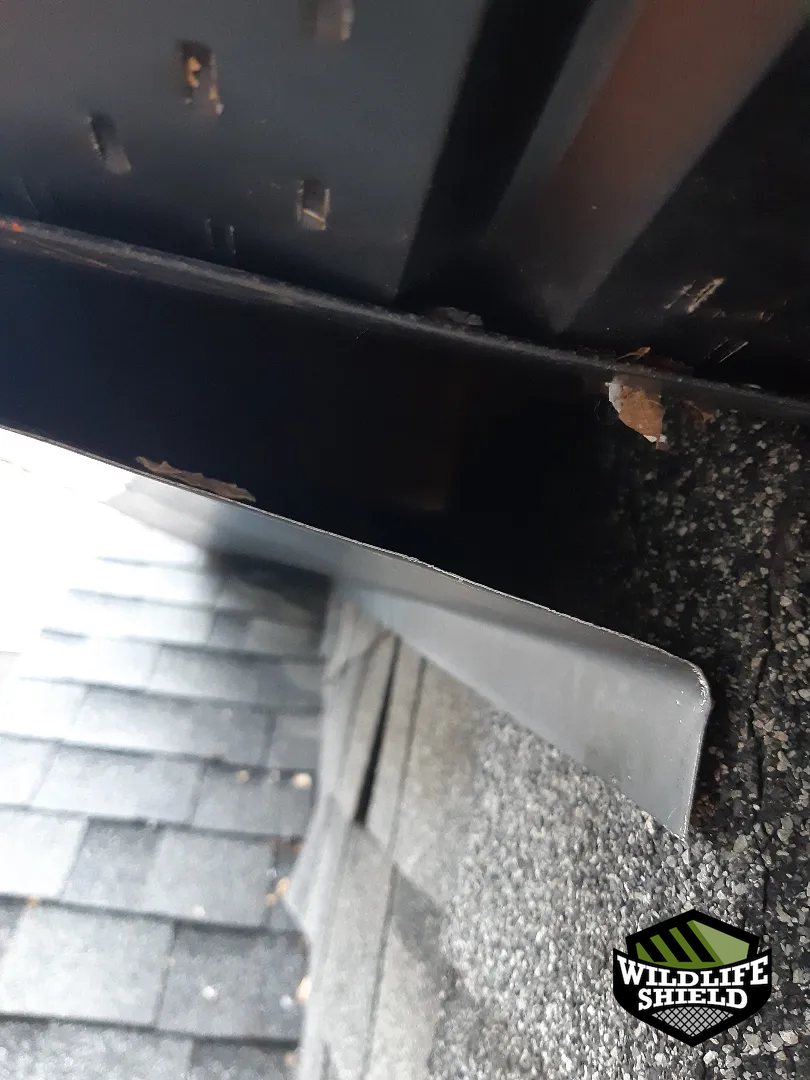
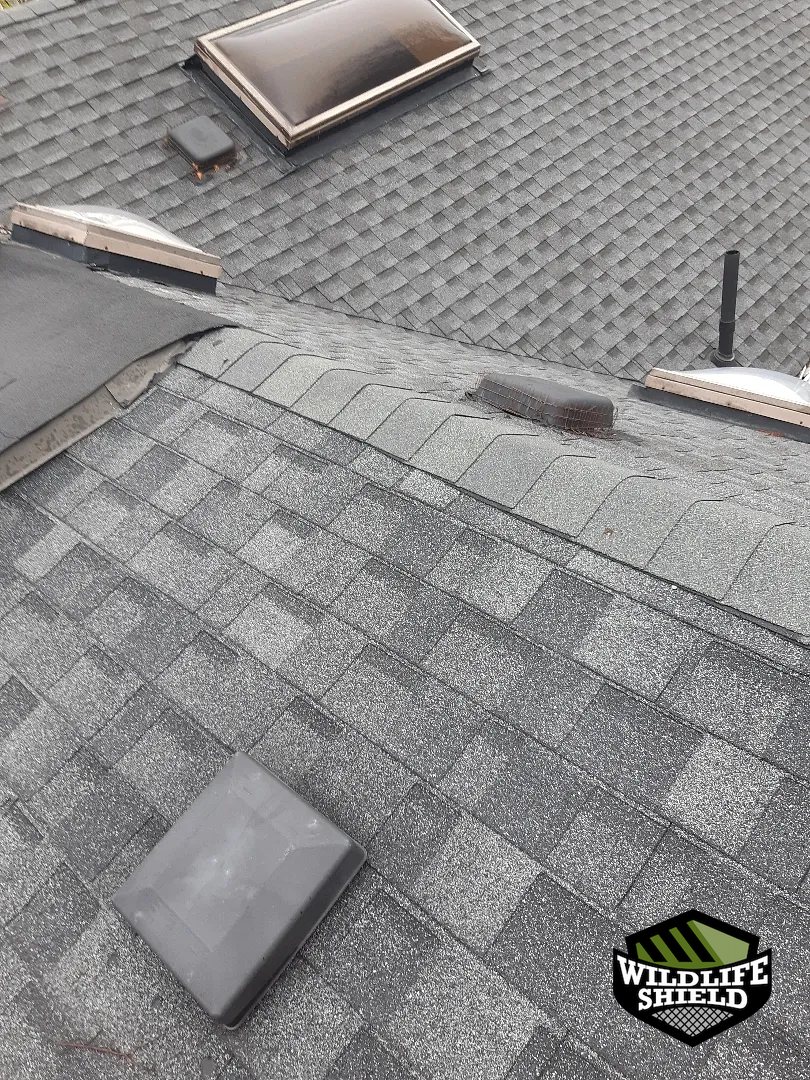
The inspection photographs documented openings beneath the roof overhang and visible damage to a roof vent cover. Additional photographs showed the installed metal screening and protective cages around roof penetrations.
The height of the structure required two technicians to complete the roof-level work.
Customer Concern
The homeowner contacted our team after hearing noises inside the roof during the day.
Daytime movement is commonly associated with squirrel activity, although the reported sounds required an inspection to confirm the source.
The homeowner wanted the squirrels removed from the roof space and the accessible openings secured to prevent further entry.
The service required identifying the primary entry points, allowing the animals to leave humanely, and protecting additional vulnerable areas across the roof.
Inspection & Findings
Visit 1 — Roof Inspection
Our technician, Ardian, inspected the roof and confirmed squirrel activity associated with two entry points.
The inspection identified openings along the roofline that provided access beneath the exterior roofing components.
One photograph showed a gap beneath a dark soffit or roof overhang panel near the asphalt shingles. The opening was positioned where the underside of the roof assembly met the adjacent roofing materials.
Another photograph showed a plastic roof vent cover with a visible irregular hole near one corner. The damaged area represented an additional vulnerability in the roof ventilation assembly.
The inspection established the following findings:
- Two primary entry points: Confirmed squirrel access locations requiring temporary one-way doors.
- Roofline openings: Gaps beneath the roof overhang provided access to enclosed areas.
- Roof vent vulnerability: Four roof vents required protective galvanized steel cages.
- Plumbing vent: One plumbing vent required galvanized steel mesh protection.
- Building height: The three-story structure required a second technician to assist with the work.
The identified openings and vulnerable roof components formed the basis of the removal and exclusion plan.
Cause Analysis
The squirrel activity was associated with accessible openings along the roofline of the three-story house. Gaps beneath roof overhangs and vulnerable roof ventilation components can provide access to sheltered spaces within the roof assembly. Squirrels are capable climbers and can reach elevated roof openings, particularly where building components provide accessible edges and junctions. The identified openings allowed the animals to access the roof space, making targeted exclusion necessary.
Treatment / Removal
Visit 1 — Humane Squirrel Removal
Following the inspection, our team installed two temporary one-way doors at the confirmed squirrel entry points.
The devices were positioned to allow squirrels to exit the enclosed roof space while preventing them from returning through the same openings.
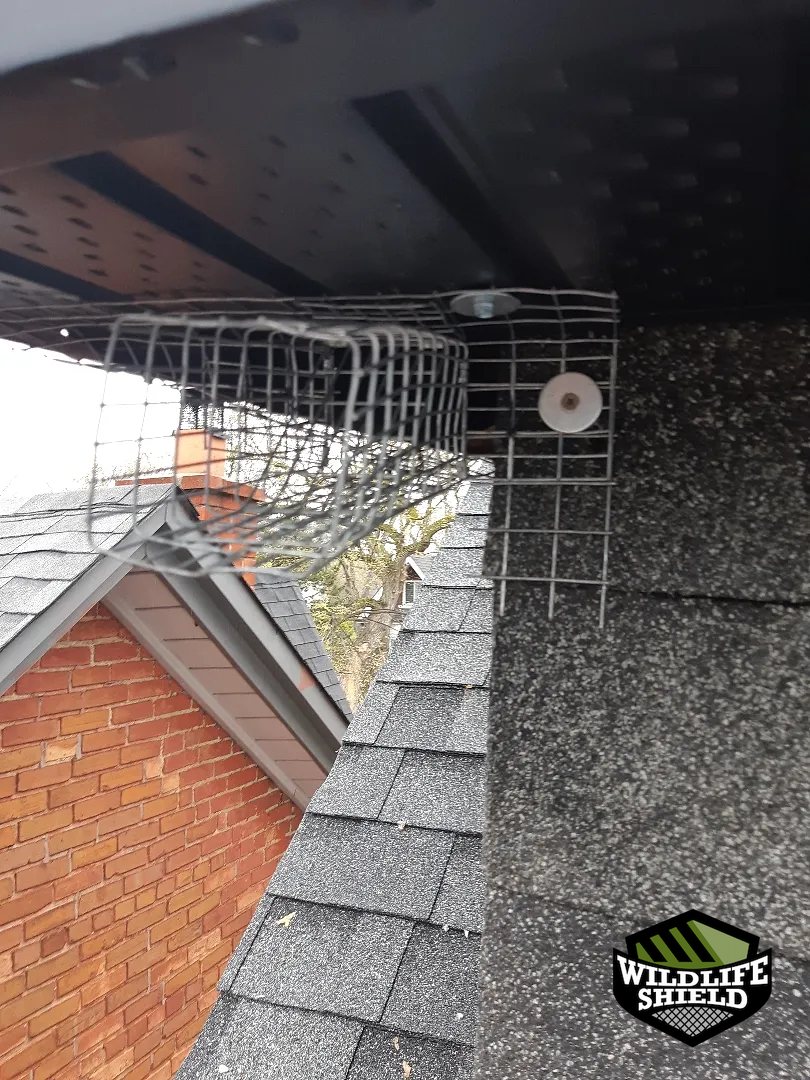
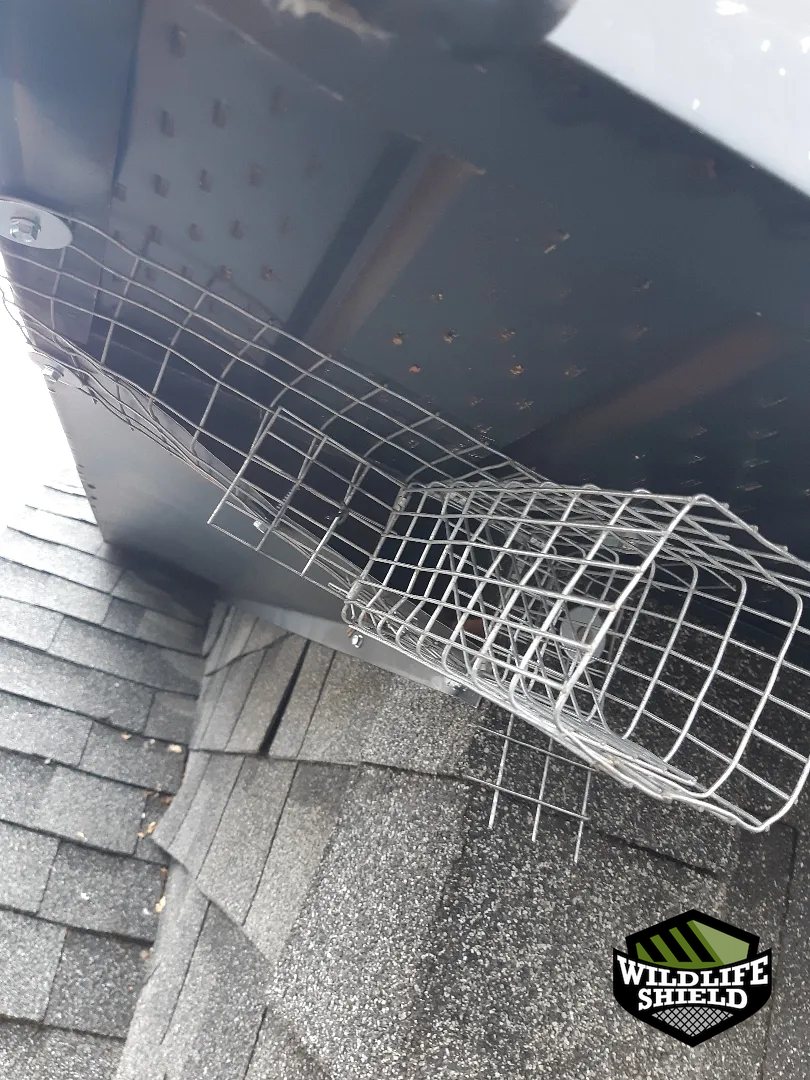
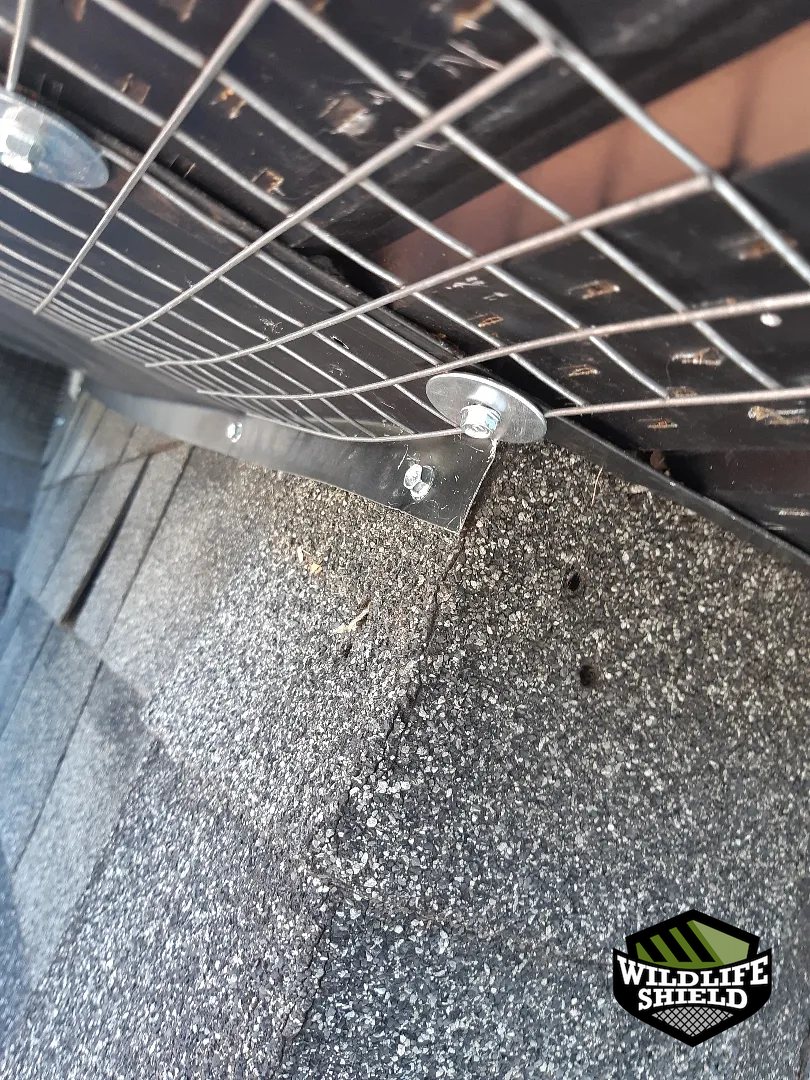
Photographs documented a galvanized steel mesh exit tunnel extending outward from an opening beneath the roof overhang.
The temporary assembly was secured to the surrounding roof components with metal fasteners and washers.
This non-lethal removal method allowed the squirrels to leave without physical capture.
The one-way doors remained installed between visits while the additional roof protection work was completed.
Visit 2 — Follow-Up and Door Removal
Our team returned for the second scheduled visit to assess the outcome of the removal.
The homeowner reported that squirrel activity was no longer being heard or observed.
Following this confirmation, both temporary one-way doors were removed.
The original entry points were then permanently sealed to prevent renewed access through the identified openings.
Exclusion & Repairs
The exclusion work addressed the two confirmed squirrel entry points and additional vulnerable roof components.
Four Roof Vent Exclusion Cages
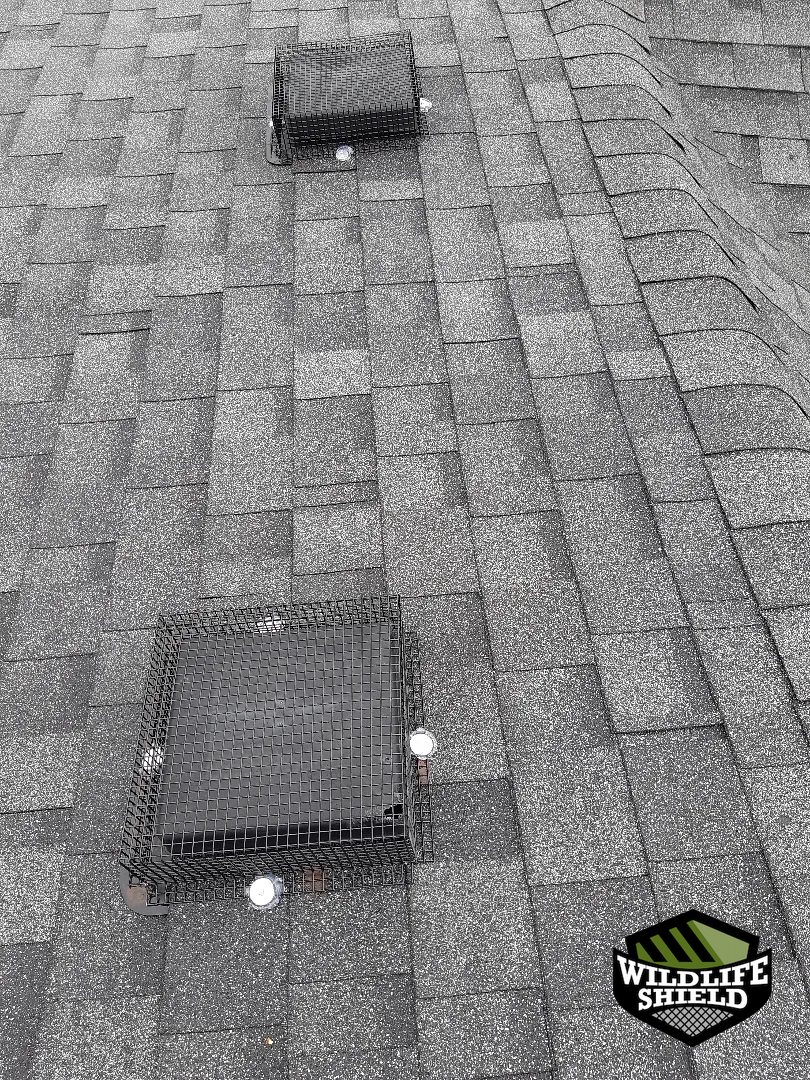
Our team installed galvanized steel protective cages over four roof vents.
The cages were fitted around the existing ventilation covers and secured to the surrounding roof surfaces.
Photographs showed rectangular and raised metal mesh enclosures installed over roof vents on the asphalt-shingle roof.
The mesh provided a physical barrier around the ventilation components while retaining openings for airflow.
The protective installations addressed the potential for squirrels to access the roof through vulnerable vent covers.
Plumbing Vent Protection
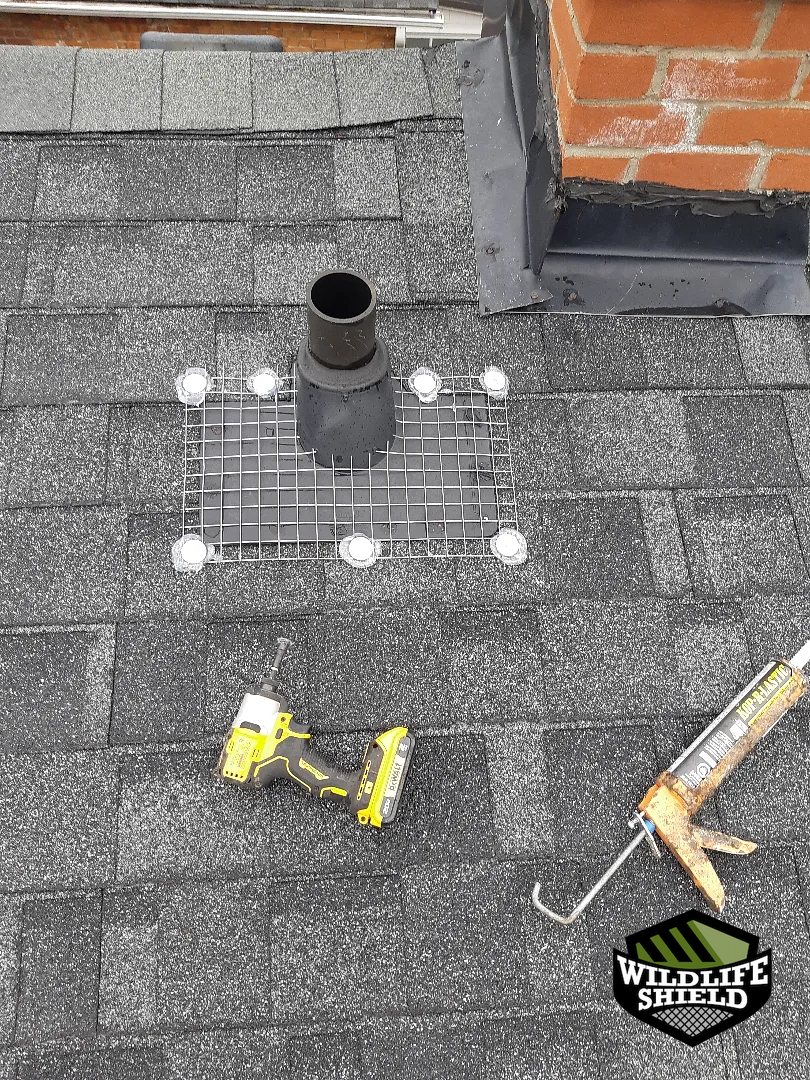
One plumbing vent was protected using galvanized steel mesh.
The installation photograph showed a metal mesh panel surrounding the base of a vertical plumbing vent pipe.
The mesh was secured with multiple fasteners and washers around its perimeter.
This installation reinforced the area surrounding the plumbing vent while leaving the pipe outlet unobstructed.
Roofline Entry Point Exclusion
The temporary one-way doors were installed beneath the roof overhangs at the two confirmed access locations.
The photographs showed galvanized steel mesh fitted against the underside of the roof assembly and secured along the adjoining roofing materials.
The mesh was shaped to accommodate the existing roofline configuration.
At the second visit, the temporary doors were removed and the entry points permanently sealed.
These repairs completed the exclusion of the confirmed squirrel access locations.
Outcome & Confirmation
The squirrel removal and roof exclusion service was completed over two visits.
During the first visit, our team confirmed squirrel activity, installed two one-way doors, protected four roof vents with galvanized steel cages, and secured one plumbing vent with galvanized steel mesh.
During the second visit, the homeowner reported that squirrel activity had stopped.
Both temporary one-way doors were removed, and the original entry points were permanently sealed.
The completed exclusion work addressed the confirmed access points and reinforced the additional vulnerable roof penetrations.
No further squirrel activity was reported at the time of the final visit, and the homeowner expressed satisfaction with the completed service.
Technician Notes
The initial inspection confirmed squirrel activity associated with two roofline entry points. A second technician assisted with the work because of the height of the three-story attached house.
Two one-way doors were installed to provide humane exits from the roof space.
The inspection photographs documented a gap beneath the roof overhang and a roof vent cover with visible damage near one corner.
Four roof vents were protected with galvanized steel cages, and one plumbing vent was secured with galvanized steel mesh. The installation photographs showed metal fasteners and washers securing the protective screening to the surrounding roof surfaces.
During the follow-up visit, the homeowner confirmed that noises and visible squirrel activity had stopped. Both one-way doors were removed, the entry points were sealed, and the exclusion work was completed.