03 May

Case Study: Raccoons Dirty Shed with Feces

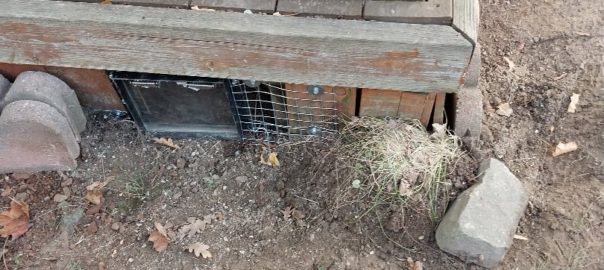
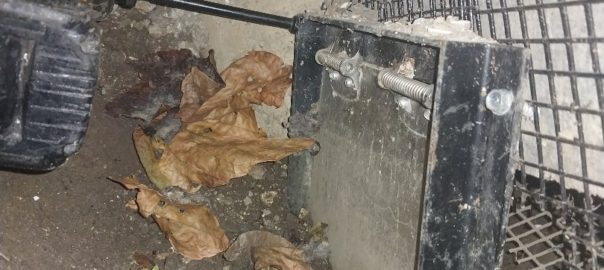
The following case study recounts a raccoon removal and disinfection service in Moore Park, Toronto. Raccoons living under a shed had left a mess of feces on the roof, causing odour problems and risking the health of the homeowners. The animals were safely removed with a one-way door and the feces were then properly removed and the roof disinfected. Read More

11 Mar

Case Study: Raccoons Destroy Soffits and Attic Insulation in Malvern

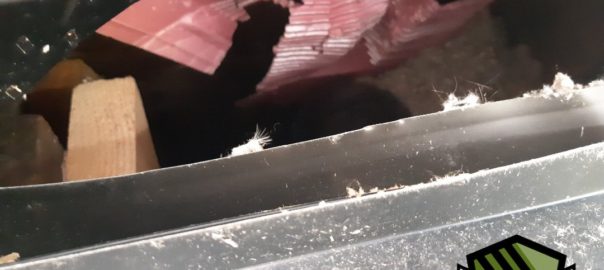
Removing wildlife is sometimes easier said than done. In this case, the study tells the story of raccoon removal and attic renovation in Malvern. The home in question suffered multiple invasions of raccoons because the roof was severely damaged. Raccoons are common in suburban neighbourhoods and they will always find a way back if they can find an opening.

Here, we removed raccoons a few times before completely renovating the attic and excluding the roof. Our comprehensive service finally rid the home of these pests and should protect it for many years to come. For affordable wildlife removal and proofing services, you can count on, call Wildlife Shield: 647-560-3988. Read More

04 Jun

What Do Raccoons Eat In The City

Raccoons are known as being scavengers and their reputation is well deserved. Whether you find them in the country or lurking in the city, raccoons can be seen wherever there is food around. Rest assured that they will not be picky when it comes to their diets, which is why it’s important for you to raccoon-proof your trash. You can do this fairly easily by securing the lid with bungee cords or heavy rock, using lights to deter raccoons, or sprinkling some ammonia on your bags.

Raccoons will eat pretty much any type of trash, but they prefer a mix of grains, vegetables, insects, rats, and fish. Depending on where the raccoons live, they might enjoy a diet of worms or crayfish. Some raccoons will even eat squirrels. Read More

28 May

When Do Raccoons Have Babies

Female raccoons give birth one time a year, and their litters are usually between two to seven babies. Although these miniature little masked raccoon might look cute, they can cause big problems for people. Raccoons will often search for a peaceful and safe place to have their litters and tend to hole up in sheds and attics where it is warm, predator-free and they have a low risk of running into humans. Read More

28 May

Dangers Of Feeding Raccoons

It might be tempting to feed raccoons and other wild animals, but it’s important for you to avoid the temptation to do so. Raccoons are not domesticated and can be unpredictable. They can also carry a whole host of different diseases. Never attempt to feed or handle a wild raccoon.

Raccoons are opportunists that gravitate towards the easiest and most accessible source of food. By feeding them, you are just making them more dependent on humans, and actually making them more vulnerable! It’s also important to remember that no matter how cute and cuddly raccoons look, they are not pets and will not hesitate to bite a person. A wild raccoon will easily perceive you as a threat and act accordingly by biting or scratching. Give these animals a wide berth in order to protect yourself and your family from unwanted attacks. Read More

24 May

How To Raccoon Proof Your Garbage

Anyone who has ever walked outside and seen their garbage bins overturned knows what damage raccoons can cause when they’re trying to get a meal. Raccoons are scavengers, and human trash is a gourmet buffet to them. Fortunately, there are a few things that you can do to keep raccoons out of your garbage.

Read More

22 May

Raccoons – Where Do They Live In Cities

Most people think that raccoons only live in the country, but they can be also found in the cities all across the country. Cities are great spots for raccoons because they offer plenty of sheltered places for raccoons to hole up and nest.

In the country, you’ll find raccoons in trees and other secluded areas, but in cities, they tend to seek shelter in places like sheds, attics and barns. Once they find a spot that they like, they’ll tend to stay there for the long-term. Raccoons prefer to find cozy places to have babies. Read More

01 Feb

Noises in the Attic – How to Identify Animals in Attic

You hear animal noises in the attic such as thumping, scratching or skittering and are the last thing you want to do is poke your head in to see what’s happening. Fortunately, it is fairly easy to identify animals living in your attic through other means besides doing a physical inspection of your attic.

Look out for the following signs to identify the offending animal; Read More

20 Aug

What Do Raccoons Eat in Cities

Raccoons are omnivorous animals so the easy answer to the question what do raccoons eat in cities is; virtually anything the critters can get their paws on.

Raccoons will gladly eat pet food left outside overnight, rotting vegetables and worms in compost, bird food, and leftovers in trash cans, fish inside decorative ponds, eggs and small birds in chicken coops, and fruits and berries from fruit trees. Although they are out of their natural environment in cities, raccoons still have an abundance of food choices in most cases. Read More

18 Aug

What Do Raccoons Eat in the Wild?

Raccoons that live in the wild tend to settle down in forests as near as they can get to a body of water. However, some wild raccoons also live in rural and urban areas. Housing and business development destroy forestry, and so the raccoon must adapt to a new environment. So, what does a raccoon eat in the wild, whether living in the forest or among rural and urban living conditions? Read More