Squirrel Entry Through Drip Edge – Roofline Exclusion in Toronto
Job Overview
Location: Toronto, Ontario
Structure: Two-storey semi-detached house
Problem: Squirrel activity in attic (early morning noise)
Service: Humane squirrel removal and roofline exclusion
Visits: 2
Summary
We were contacted regarding early morning scratching and movement sounds coming from the attic space. Based on the timing and description of the activity, squirrel presence was suspected. Our team completed a full roof inspection, identified a long open drip edge gap as the primary entry point, and installed a one-way door system. Following successful evacuation, the opening was permanently sealed with galvanized steel mesh.
Case Study Video
The video documents the exclusion work conducted to complete the squirrel removal.
Background / Property Context
The property is a two-storey semi-detached home with asphalt shingles and aluminum eavestroughs. The roofline included a continuous drip edge detail along the front slope. The area where the soffit meets the shingle edge presented a linear gap that had not been previously screened.
Homes of this design commonly develop separation at the drip edge over time due to weathering, thermal expansion, and roof aging.
Customer Concern
The homeowner reported hearing scratching and movement in the attic during early morning hours. The activity pattern was consistent with squirrel behavior, particularly during nesting or seasonal sheltering periods.
No interior damage had been reported at the time of inspection.
Inspection & Findings
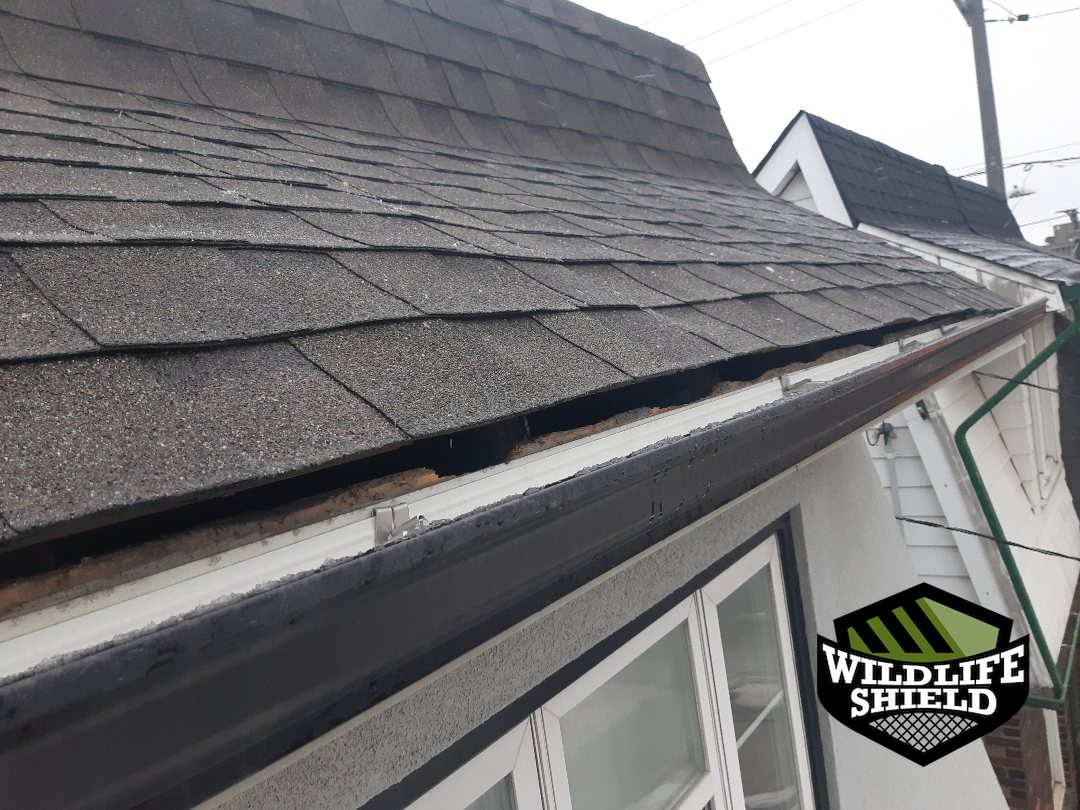
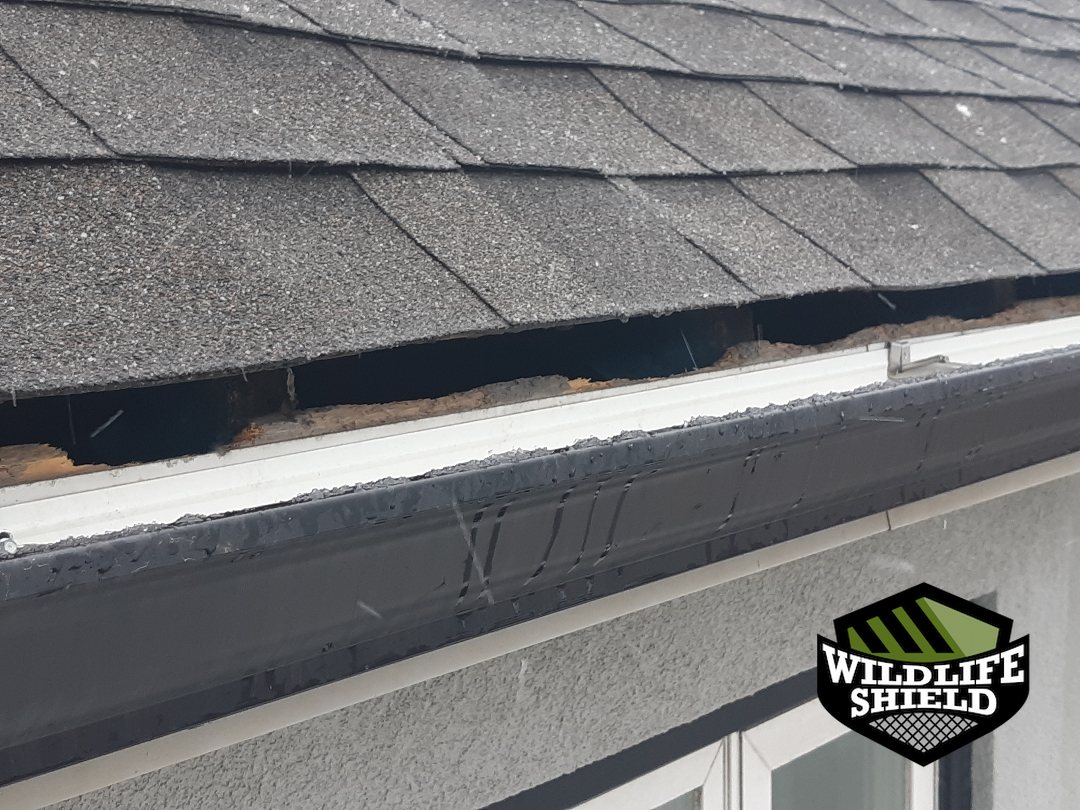
Ardian conducted a full roof inspection as part of our standard squirrel removal protocol. The primary entry point was identified along the drip edge, extending approximately seventeen feet in length.
The gap between the roof sheathing and fascia allowed direct access into the attic cavity.
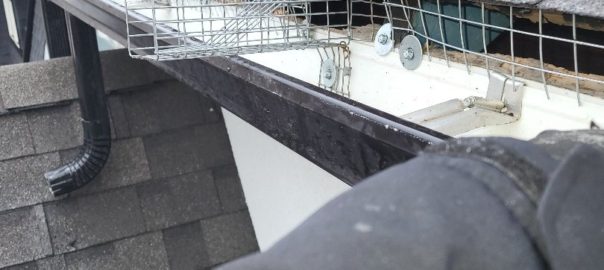
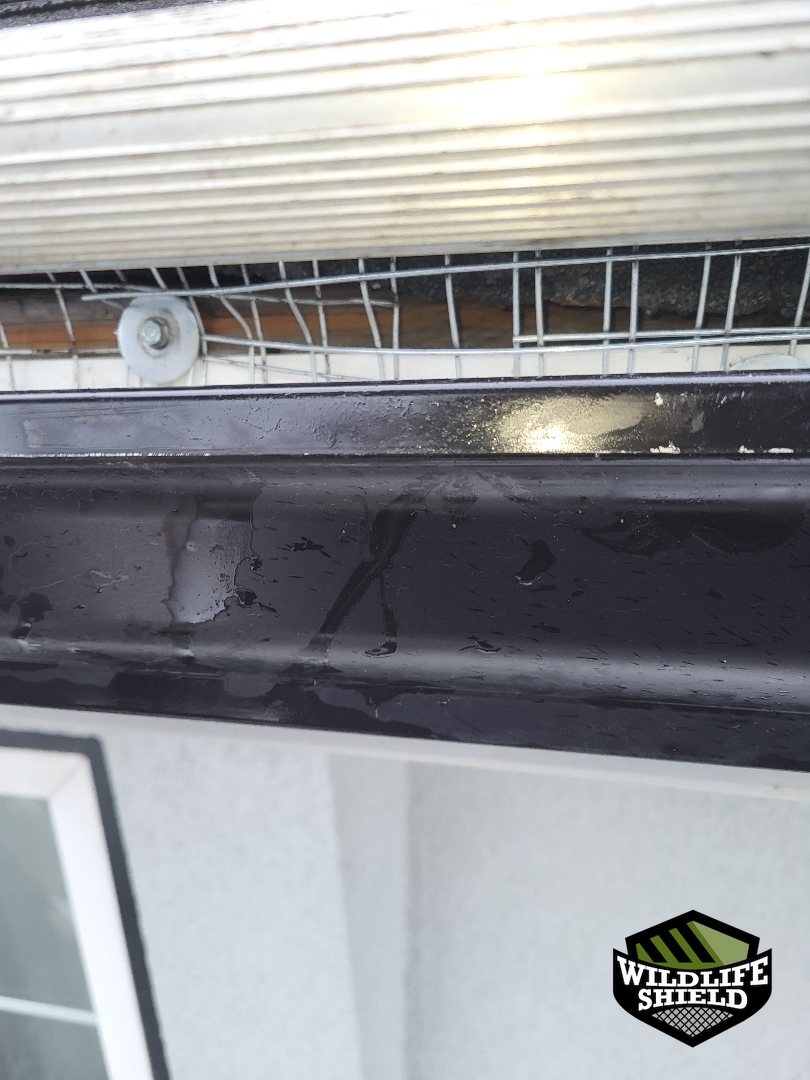
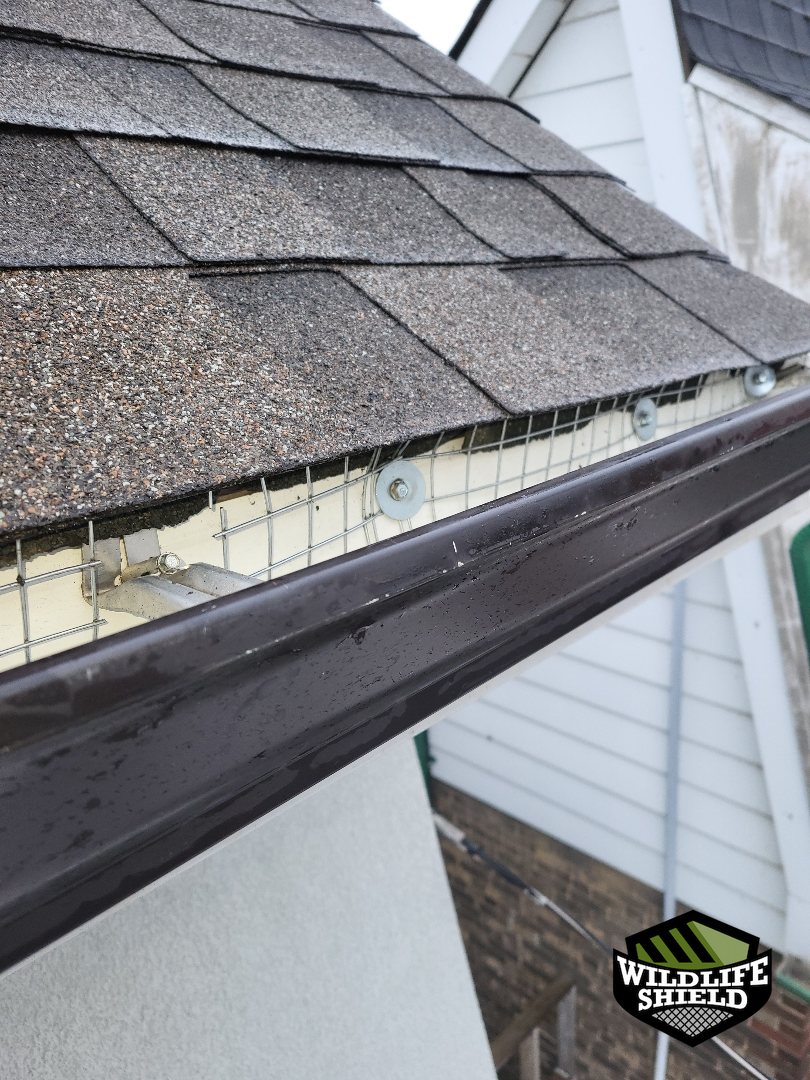
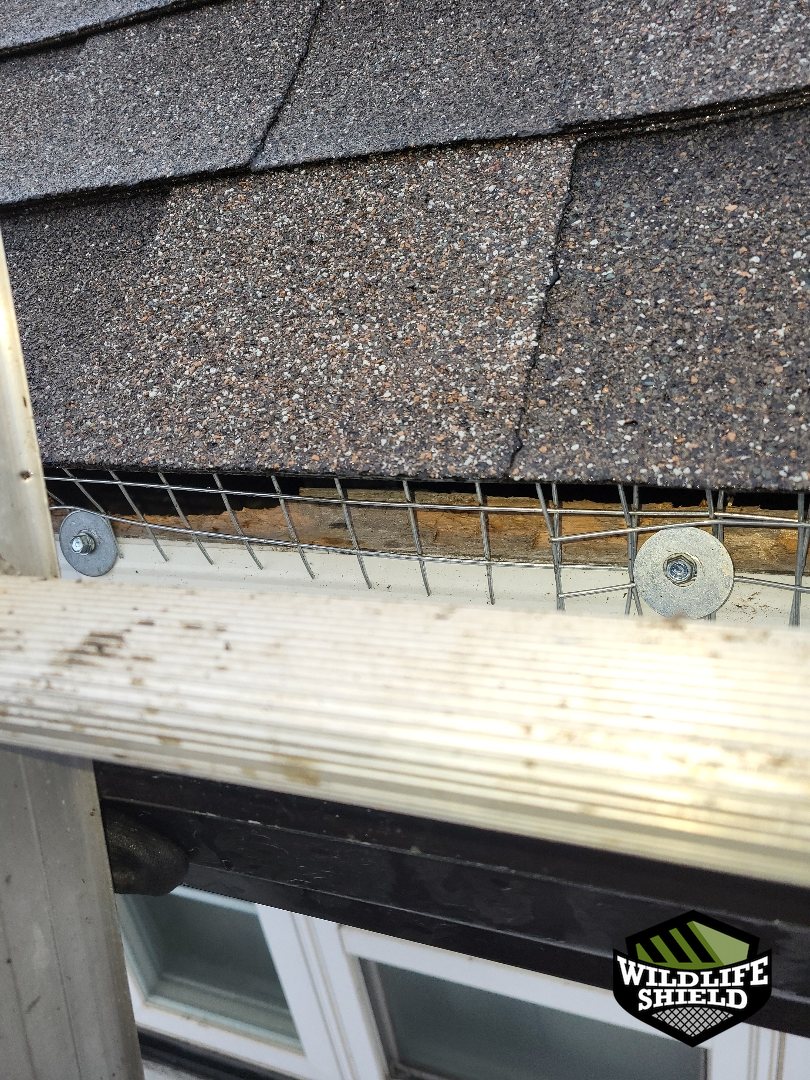
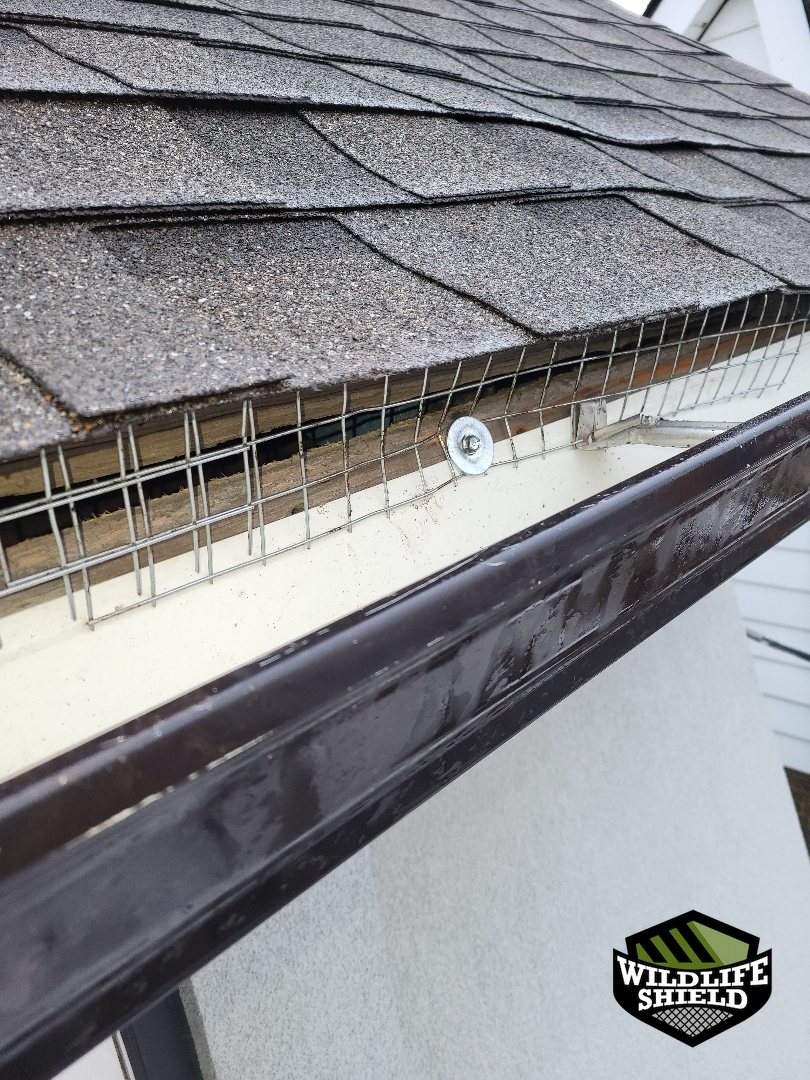
Photos show:
- A continuous open gap beneath the shingle line
- Existing screening that did not fully close the opening
- Visible access space behind the drip edge
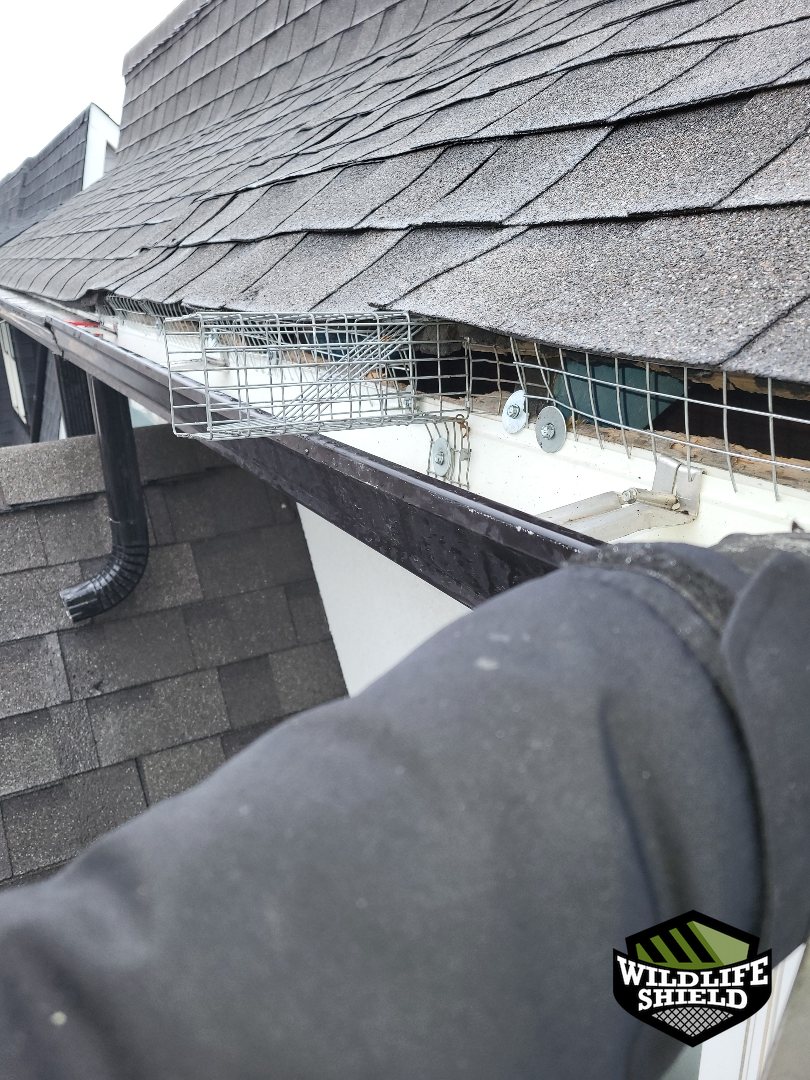
- Installation of a one-way door system at the active section
- Galvanized steel mesh secured with washers along the full length of the exposed area
No secondary entry points were identified during inspection.
Cause Analysis
Drip edge gaps commonly form when fascia boards shift or when original construction does not include full wildlife screening. Over time, minor separation can widen enough for squirrels to exploit.
Squirrels are strong climbers and routinely access rooflines via nearby trees, fences, or adjoining structures. Once a linear opening is identified, they will widen or repeatedly use that same access point.
Treatment / Removal
A humane squirrel removal process was followed.
A one-way door was installed over the active entry section of the drip edge. This allowed the squirrels to exit the attic safely while preventing re-entry.
The remaining exposed drip edge gap was temporarily secured pending confirmation of animal departure.
No trapping or lethal methods were used.
Exclusion & Repairs
After confirmation that activity had ceased, the one-way door was removed.
Seventeen feet of drip edge was permanently sealed using galvanized steel mesh. The mesh was fastened securely with exterior-grade screws and washers to ensure long-term durability and resistance to re-entry.
All previously identified gaps along the roofline were reinforced to prevent future wildlife access.
Outcome & Confirmation
At the follow-up visit, the homeowner reported no further sounds or activity in the attic.
The one-way door was removed, and all exclusion work was inspected. No new entry points or disturbances were observed.
The wildlife issue was considered resolved at that time. No further squirrel activity has been reported.
Technician Notes
Ardian completed the full roof inspection and supervised installation of the one-way door and galvanized mesh reinforcement. Richard assisted with roofline access and secure fastening along the seventeen-foot drip edge section.
All work was completed from the exterior using safe roof-access procedures. Final inspection confirmed secure attachment and full closure of the identified entry gap.
This work was completed by our Toronto Wildlife control team. For Wildlife control inquiries in Toronto, contact 647-496-2211.